A fire fighting course seeks to do more than just teach you how to fight fires– it seeks to equip you with a holistic rescuer skillset that can help you save lives in a variety of scenarios. This article– brought to you by EMCARE– is going to discuss a few of the surprising skills you might find yourself learning in a fire fighting course. Some of the skills mentioned are included within any basic fire fighter’s course, but others will be found in more specialised training programmes available to those interested in advancing their rescue skillset. At the end of the day, you can never be too prepared.
Why A Fire Fighting Course Teaches You To Do More Than Fight Fires
We’re not making a particularly insightful or novel statement when we say that a firefighter’s primary role is to suppress fires. Yet that is far from their only skillset or speciality. A firefighter needs to have a well-rounded skillset involving both practical abilities and theoretical knowledge.
The truth is that a firefighter needs to be able to handle a whole range of emergency scenarios, even if they’re only related to firefighting in the most tangential sense. Fire scenarios are full of risks, many related to non-fire elements, like human panic, infrastructure failure, medical emergencies and hazardous materials.
On top of that, firefighters are in many instances called in to conduct or assist with emergency scenarios totally unrelated to fire, primarily associated with rescues in challenging conditions or terrains. The more varied a firefighter’s skillset, the better prepared they are for a crisis of any kind. That’s why any good fire fighting course takes the extra steps to equip trainees with varied skillsets that go beyond the realm of fire.
Emergency Medical Services
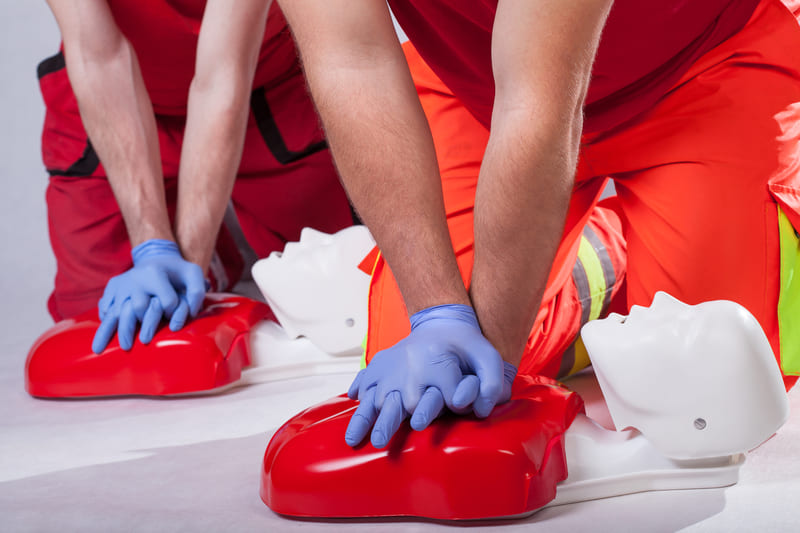
This is probably the least surprising item on this list, but it is an incredibly important one. In the course of a firefighter’s work, they are more than likely to come across injured people suffering from burns, smoke inhalation or trauma. As the first point of contact, a firefighter is uniquely placed to administer essential first aid to stabilise the patient until they can be passed on to professional healthcare services.
The EMCARE fire fighting course spends a significant amount of time focusing on this aspect of the job, ensuring that all trainees know how to perform emergency medical aid. However, if you wish to take your medical training further, EMCARE also offers a range of dedicated first aid courses from the most basic to highly advanced levels.
Excellent Communicators
Firefighters need to be great communicators to do what they do. No firefighter works alone, always operating as a team divided into specific roles. They need to be able to communicate with each other clearly at all times, coordinating movement and action, as well as warning each other of incoming risks. On top of that, firefighters need to be in constant communication with the organisation’s border communications network– known as the ICS or Incident Command System– which coordinates the movement of firefighters and resources.
It’s not uncommon for firefighters to have to work with other emergency responders, who all use standardised communication systems to keep in touch with each other. While simple to use once you’ve got the hang of it, the system relies on adherence to strict rules to keep the flow of information smooth.

Hazardous Materials Handling Fire Fighting Course
When hazardous materials escape containment, there’s no telling what could happen. Sometimes it results in fires, but other times it’s toxic smoke or the risk of ground and water contamination. The aftereffects of an unchecked hazardous material spillage can have massive rippling effects on both human communities and natural environments in unpredictable yet almost uniformly disastrous ways.
Often, the people responsible for resolving messes such as these are firefighters. They’re already equipped with the basic skills that revolve around working in physically hazardous and high-stakes environments with the use of specialised equipment. All it takes is a few extra refinements to a firefighter’s training to prepare them for hazardous materials.
That’s why there’s a specialised EMCARE hazardous materials handling fire fighting course. In this focused training course, you’ll learn exactly how to approach and handle a wide range of hazardous material breaches, keeping both yourself and your surroundings safe in the process.
Strong Swimmers
If you’ve signed up to be a firefighter, it’s likely that the last thing you’d have thought you’d need to be good at is swimming. But the fact of the matter is that firefighters are some of the first emergency services that are called during serious accidents or natural disasters– even when they’re related to water.
When severe floods occur, people often become trapped and face the risk of drowning or hypothermia if they are not extracted in time. It takes a coordinated team of experts using equipment and rescue techniques to do this without endangering the rescuers themselves. A fire fighting course will already have given you the ability to work in high-pressure situations as a team, handle physical strain and operate rescue equipment. With a few additional training courses, you’ll learn how to apply these skills in other rescue scenarios.

Conclusion
In conclusion, a fire fighting course is about more than just teaching you how to fight a fire. It’s about equipping you with a well-rounded rescuer’s skillset that allows you to take on a range of emergency situations. Some, like first aid and communication skills, will be included in a basic fire fighter course. Others, like the hazardous materials handling course, will be available as a specialised course to be taken on top of basic training. Whether you’re interested in covering the basics or going to the highest levels, EMCARE is the best place to start. Our training facilities are scattered through South Africa, making our courses accessible to just about everyone in the nation with the will to become a rescuer.