
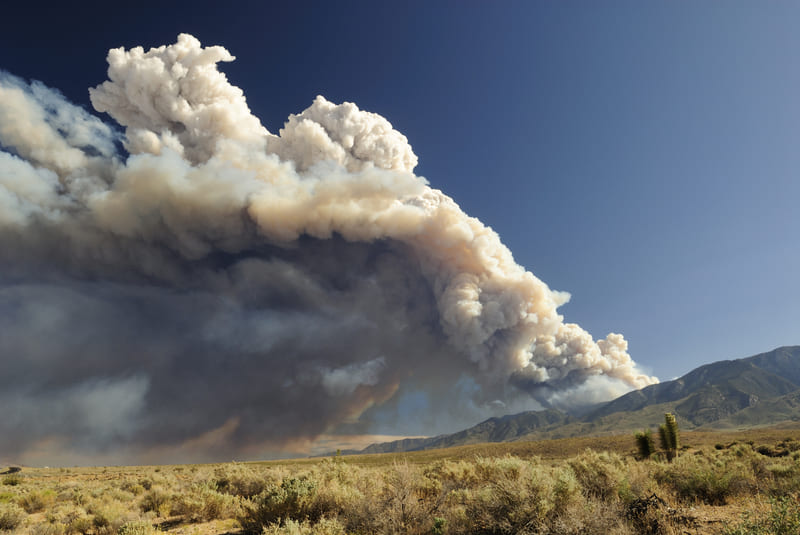
Fire fighting training for urban versus natural fires takes on a distinctly different nature, and the two are almost entirely separated. In South Africa, you’ll find specialised wilderness firefighters who operate independently from conventional firefighters who operate in urban environments. This article– brought to you by EMCARE– is a deep dive into the roles of these outdoor specialists and the various skills they need to hone to handle wildfires. From top physical training and constantly evolving evacuation plans, to fire behaviour classes and snake handling courses, the realm of wilderness firefighting is a multidimensional one; crucial to the survival of South Africa’s urban/natural blended landscape.
What Are Wilderness Fire Fighters?
Wilderness firefighters, as you very well may have guessed, are firefighters who specialise in suppressing fires that occur in outdoor places, usually in forests or along mountains. While these fires do occasionally creep into urban or inhabited territory, they avoid directly fighting fires within structures. That job is left to other firefighters with the right equipment and skillset.
In some ways, their jobs are easier than those firefighters who operate within urban environments: they rarely work in enclosed spaces, floor and roof collapse is all but impossible and there’s less complications related to chemical fires that they face.
On the other hand, the fires they fight can reach massive sizes that often create rippling environmental effects that can themselves pose a risk to the firefighters. Then of course, the remote settings they operate in are not only physically taxing to navigate– they make the support of ground vehicles limited or impossible.
Wilderness Fire Fighting Training And Physical Fitness
It takes some serious fitness to be a firefighter, but wilderness firefighters need to be a special breed of tough. When a wildfire rages, it doesn’t have the decency to stick to roads or easily traversed wilderness paths. It ranges up and down mountains and forests, not caring for obstacles that would significantly slow down humans.
Wilderness fire fighting training must therefore prepare trainees to traverse inaccessible wilderness terrain as a team, all wearing tough, uncomfortable and hot equipment. After the hike is over, that’s when the difficult part starts– actually fighting the fire.
Because wilderness firefighters rarely have access to fire trucks on the fire line, they have to use hand tools to combat the fire. While there are water sprayers and long-distance hoses available, the bread-and-butter weapon of the wilderness firefighter is a rubber beater that is used to physically smother the fire.
Wilderness Fire Fighting Training And Clear Communication, Lookouts and Evacuation Plans
‘Spreading like wildfire’ isn’t a phrase that sprang up on a whim. It is a real indication of just how fast and unpredictable wildfires can be. When wilderness firefighters face a wildfire, they must always assign members of their team to the specific role of observing the fire and calling out any changes to the team– especially if those changes could spell sudden disaster.
Wilderness fire fighting training stresses the importance of constant quality communication. It teaches trainees to set up clear lines of sight with the fire, and a constant stream of information about the movements of that fire. The training will emphasise the importance of formulating evacuation plans, which need to be clearly communicated to everyone involved. Furthermore, these plans must constantly evolve to an evolving situation, without leaving anyone out of the loop.

Wilderness Fire Fighting Training And Fire Behaviour
To yet again begin a paragraph with a quote, we’ll bring out Sun Tzu’s ‘know thy enemy’ from his famous Art of War. This point could not be more applicable in firefighting, as fires are anything but simple. In a wilderness setting, fires can become truly massive without losing any of their speed or unpredictability. It takes careful study of fire behaviour to be able to anticipate and thus combat a wildfire.
Your wilderness fire fighting course will teach you how to read the environment and the fire as it currently exists to develop a model of what the fire’s expected development will be. If done successfully, this will help to not only minimise harm but also allow you to proactively remove fuel load and slow a fire’s progress. It can isolate the most promising areas of fire suppression, as well as the areas to avoid.

Wilderness Fire Fighting Training And Snake Handling
This is likely something that very few new trainees anticipate, but it’s far from unheard of to see wilderness firefighters undergo a basic snake handling course during their fire fighting training.
The wilderness is, of course, full of animals that could pose a threat to humans, including snakes. On any normal hike, encountering these reptiles would be an unsurprising event. Yet during wildfires, mass panic and exodus are sparked among wildlife, causing them to flee in the direction of safety.
As a firefighter progresses towards the fire line, they are significantly more likely to encounter distressed snakes than in any normal scenario. You certainly don’t want your fire-fighting session to kick off with a case of neurotoxic envenomation, so this basic snake-handling course will help you navigate a reptile encounter with little risk. At the very least, it’ll help to familiarise yourself with snakes and stave off the fright of a surprise run-in.
Conclusion On Wilderness Fire Fighting Training
Wilderness firefighters operate in the great outdoors rather than the urban sprawl, forced to contend with a whole other host of risks compared to the conventional firefighter. Facing challenging terrain and limited vehicle support, they rely heavily on their physical fitness, smarts and clear communication with one another to get the job done. Their training focuses almost as much on the environment they work in as it does the fires that happen here, as an understanding of the physical terrain and ability to navigate it is key in proactive fire suppression. From heavy-duty hiking to snake handling modules, you’ll find this fire fighting training to be a wild experience.