

A basic fire fighting course may be as far as you go in your firefighting training, or it may be the start of a long and exciting journey for you. Our introductory course is designed to impart a basic but sufficient ability to combat fire risk, allowing you to gain the relevant certifications. What it also does, however, is open the possibility for more advanced training that involves not only building upon foundational knowledge but delving into niche specialisations. Taking this route can be very rewarding, not only in terms of protecting yourself and your community, but in opening the opportunity for employment in high-paying industries with low competition.
The Basic Fire Fighting Course Is A Valid Introduction
EMACARE’s Basic Fire Fighting (BFF) Course is a simple course that takes only a single day to complete. It takes trainees through the basic theory of fire risk and behaviour, laying the groundwork for a technical and practical response that involves coordination of movement and direct suppression through tools.
As a course, it comes with all the necessary accreditation to certify trainees as fire prepared. This is important for businesses, as it allows them to prove to governing bodies responsible for health and safety laws that their workforce has received a basic– but more than sufficient– level of fire response training.
Moreover, the BFA course signifies the start of a far more comprehensive journey. It is the introduction and first stepping stone towards a more robust fire suppression skillset, which has plenty of room to grow. EMCARE’s remaining fire fighting courses work to build upon this first course in myriad ways.
Move Onto A More Advanced Fire Fighting Course
EMCARE’s most basic fire fighting course isn’t a standalone presence. We also offer a range of other courses of increasing intensity and specificity, the Advanced Fire Fighting (AFF) Course being one of the clearest examples of a direct upgrade. Our courses are set up to feed into one another sequentially, building upon the knowledge and skill sets of each prior fire fighting course to develop a trainee’s overall ability in steady leaps. This staggered approach gives trainees control over their education, allowing them to go exactly as far as they deem fit. Moreover, it makes the process of learning easier by breaking the process into clear chunks.
Most of our courses have what amounts to a basic and advanced version, allowing for multitudinous opportunities for advancement. For most people, any basic EMCARE fire fighting course is more than enough to seriously mitigate the risks of a fire. The advanced courses are there for those who wish to pursue a career in fire suppression or seek employment in a seriously high-risk environment.
Delve Into A Highly Specialised Fire Fighting Course
Thus far, we’ve discussed mostly how our fire fighting courses can help trainees combat fire risk and develop a career in a conventional firefighting field. This alone is a highly valuable skill set to have, allowing you to keep yourself and your community safe in the face of fire risk. That being said, these are far from the limits of what firefighting training has to offer.
There exist multiple more specialised training courses that delve into fields associated less with traditional firefighting, intersecting more with industrial safety or technical rescue careers. The first of these is the Hazardous Materials Handling (HMH) Course, which empowers trainees to safely resolve instances of dangerous chemical spills. This niche task is critical in industries where hazardous materials are common, preventing serious damage to human life and environmental integrity.
A second example would be the Confined Space Entry (CS) Course. Over the course of the day, you’ll be taught everything you need to know about rescue operations in tight spaces, instilling critical skills and mindset in a high-pressure environment. This course is valuable across a wide range of industries, making it a great choice for flexibility and versatility.
Why Invest In A More Advanced Fire Fighting Course?
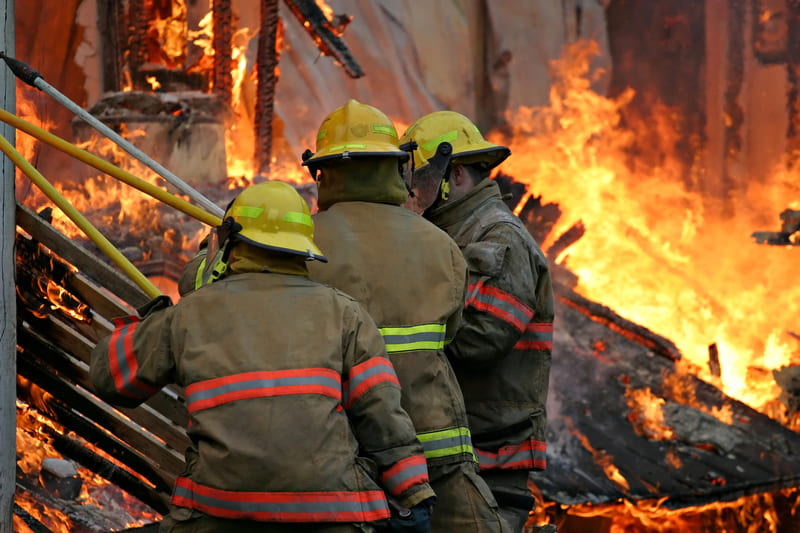
There are a variety of reasons why you would elect to undergo further firefighting training after completing a basic fire fighting course. It may be driven by a personal desire to be better prepared to anticipate and suppress fire, allowing you to do so with greater confidence and proficiency. Moreover, being better trained to deal with fire also makes doing so safer for yourself and those around you.
It can also be motivated by career. There are multitudinous industries that require advanced or specialised levels of firefighting training. The most direct of these would be becoming a firefighter, but this is far from being the sole option. Mining, offshore oil drilling, forestry, rescue technicians and more require firefighting related skills, and are known to handsomely reward applicants with the requisite abilities.
At the end of the day, EMCARE cares mostly about ensuring that you have the option to pursue those opportunities or callings, whatever they may be. We will continue to provide South Africa with professional-level emergency response training, dedicating our facilities and staff to empowering everyday people with life-saving knowledge and abilities.
Conclusion
The EMCARE Basic Fire Fighting Course grants the certification of ability that ticks the health and safety compliance box for most businesses, making it sufficient for a large portion of the population. However, EMCARE also provide a series of more advanced training programmes designed to build upon that basic knowledge until the trainee is a true fire suppression adept, allowing them to take on more serious firefighting roles.
Some of those courses involve specialisation like hazardous material handling or tight space entry, giving them skills useful to a variety of well-paying industries. Whether pursuing more advanced training is motivated by a desire for pure skill progression or to seek profitable employment, EMCARE cares only to ensure that you receive the highest quality training possible.