
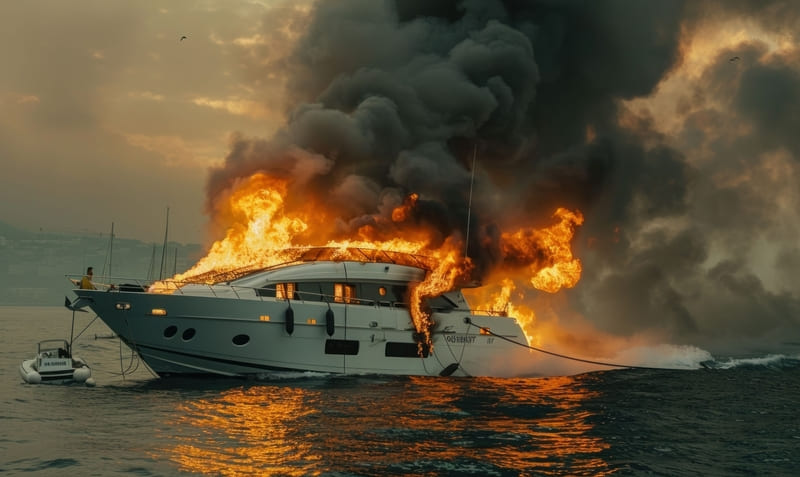
Fires that break out at sea pose a very different level of risk when compared to fires on land. On a superyacht with its confined spaces, engine rooms, fuel systems, complex electrical systems, and limited routes of escape, all these factors increase the level of danger when an emergency occurs.
Add to that the reality that immediate support from external emergency services is not available (unless docked at port), meaning the first response comes from the crew on board. In this environment, fire fighting training is not a useful skill to have; it’s actually a crucial element to onboard safety and emergency readiness.
For crew members working on superyachts, fire fighting training gives individuals the knowledge and practical foundation required to identify potential hazards, respond safely to early-stage fires, and follow structured procedures while under the added pressure of being at sea.
In this EMCARE guide, we’re going to unpack why fire fighting education matters so much when at sea, what core skills it will develop, and how these principles actually support safer and more effective response efforts in a maritime environment.
Why Are Fire Risks Different On Superyachts?
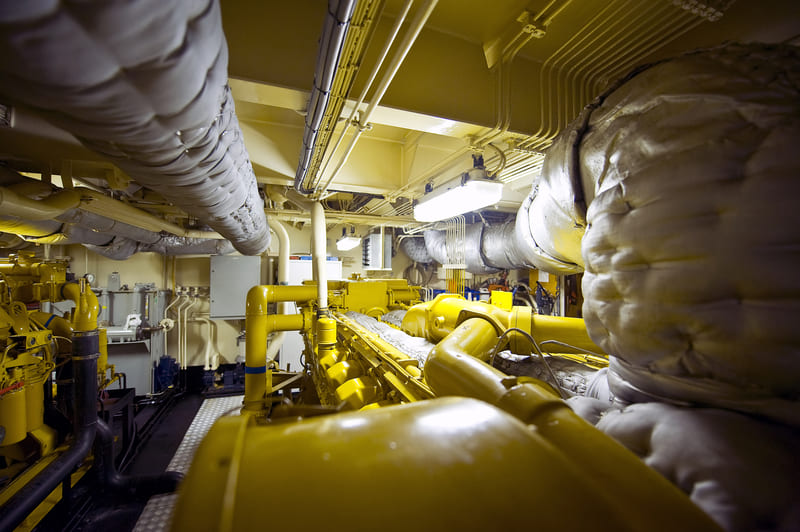
Fire risks on a superyacht (and any sea vessel) are shaped by a combination of several factors that make response more complex when compared to many land-based environments. Firstly, engine rooms generate heat, contain fuel, and mechanical systems, all in close proximity, while other electrical systems throughout a vessel can introduce additional ignition risks. Additionally, the interior spaces of a boat are usually enclosed, cramped, and interconnected, meaning smoke and heat can spread rapidly through narrow corridors, cabins and service areas.
Another factor that increases the risks that come with fire on a vessel is the limited escape routes. As opposed to a building on land, yachts don’t offer easy access to external emergency exits, and don’t come with the rapid assistance found on land with local fire services. Naturally, this places greater responsibility on the crew to pick up on problems early and take swift, safe and appropriate action without delay.
Because of these conditions, which are unique to being at sea, fire fighting training is especially vital for crews on superyachts. Proper fire training helps crew members build a foundational understanding of how fires behave in confined spaces, why early response matters, and how to act within safe intervention limits while protecting crew and passengers.
Why Is Fire Fighting Training Essential For Crew Members?
On superyachts, crew members are not merely support staff when an emergency happens; they are, in fact, the immediate response team. Should a fire break out onboard, there’s no realistic expectation of rapid outside assistance, in the way that there is on land.
Even when help eventually becomes available, the first and most crucial decisions would have already been made by the crew members on board, and this is why fire fighting education is so vital in maritime settings. It gives the crew member a practical foundation to identify danger early, act without hesitation, and respond safely and effectively within structured protocols as opposed to acting on instinct.
Fire fighting training also teaches crew members that their role isn’t only fighting fires, but also to manage the first stages of an incident correctly, which includes identifying the signs like smoke, heat, unusual smells, or system alarms, raising the alarm immediately, and helping to contain a situation before it escalates. Additionally, training also includes learning about which equipment should be used safely, whether intervention is still possible, and when the priority needs to shift to protecting lives, by supporting evacuation protocols or compartmentalisation procedures.
On superyachts, this level of preparation is imperative because the environment leaves very little room for error. The confinement of the accommodation spaces, engine rooms, electrical systems, and fuel sources all pose different risks, and delayed or poorly judged responses can result in small incidents escalating rapidly.
Thus, fire fighting training provides crew members with a much clearer understanding of these risks and helps them operate as a part of a coordinated emergency response, which is vital for the protection of passengers, crew and the vessel.
What Fire Fighting Training Teaches That Matters At Sea
Any decent fire fighting training course teaches cadets much more than a general understanding of fire safety. It also teaches the core principles that will help first responders identify the kind of fire they’re dealing with, what equipment is appropriate, and how to respond effectively without creating more danger. In the world of superyachts, these principles are especially crucial as the margin for error is far smaller than that of a land-based fire emergency.
A key aspect to fire fighting training is understanding how fires behave. Crew members need to have knowledge about how fires start, how they will spread, and how several factors, such as oxygen, fuel, heat, and enclosed spaces, affect how a fire develops.
Aboard a vessel, where most of the time compartments are packed close together, and ventilation systems can affect the movement of smoke, this knowledge is highly practical and can mean the difference between life and death. Having proper fire training can help crews accurately assess the severity of a blaze and understand why immediate and structured action is so vital.
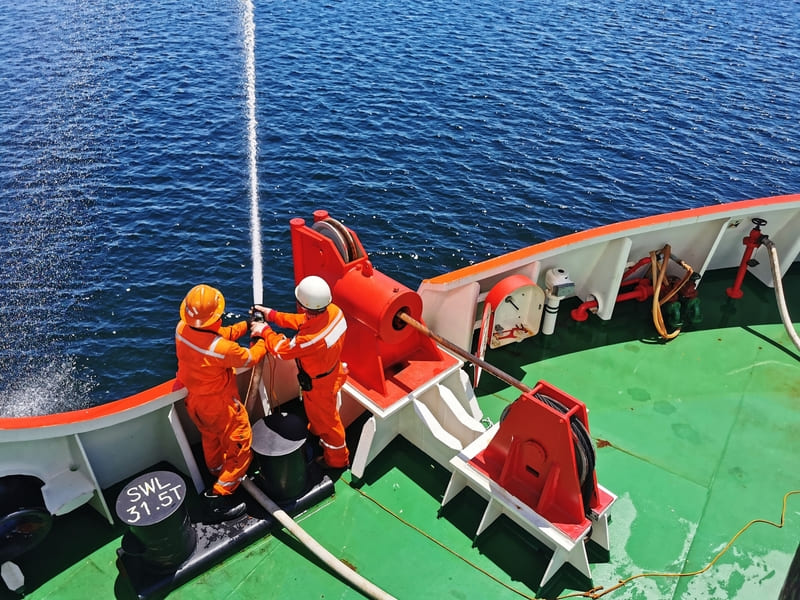
Training also teaches students the correct use of firefighting equipment, which includes how to identify the right extinguisher for the various classes of fire, and know when the incorrect extinguishing method can actually worsen the situation, especially where fuel, electrical systems, or machinery are involved. And going beyond equipment, fire training also reinforces procedural response, raising the alarm, communicating clearly, supporting containment, and working within safe intervention limits.
Evacuation And Safe Intervention In A Maritime Environment
On superyachts, the crucial decision of either continuing suppression or switching to immediate evacuation is especially vital as space, access, and escape routes are limited. The crew has to know that not every fire can be fought head-on. If the smoke density increases, visibility drops, heat intensifies, or the fire starts to spread beyond the point of origin, then the priority needs to shift from suppression to protecting human life and isolating the area as far as possible.
In simple terms, this means they need to follow the established onboard protocols without hesitation. The crew might have to close doors, isolate ventilation where appropriate, restrict movement to affected spaces, and direct passengers toward safer muster points. Clear communication is crucial at this stage, especially when guests on board might be unfamiliar with the layout of the vessel.
Evacuation at sea is also obviously more complicated, as moving people off a boat might not be possible immediately. And for this reason, fire fighting training needs to support not only early response, but also controlled withdrawal, compartmentalisation, and passenger management.
Once again, on superyachts, safe intervention is not only about tackling a blaze. It’s also about knowing when to stop, when to secure the area, and knowing how to keep all people on board as safe as possible while the situation is brought under control.
Enrol With EMCARE Today
Working on the superyachts already demands a high level of preparedness, and more so when fire risks can escalate so fast, with outside assistance not being immediately available. Proper, robust, and comprehensive fire fighting training helps individuals build a practical foundation that they need to respond safely, protect passengers and crew, and support emergency protocols that are structured in high-risk environments. To bolster your emergency readiness with accredited, practical instruction, visit the EMCARE website today and explore our fire fighting courses.