
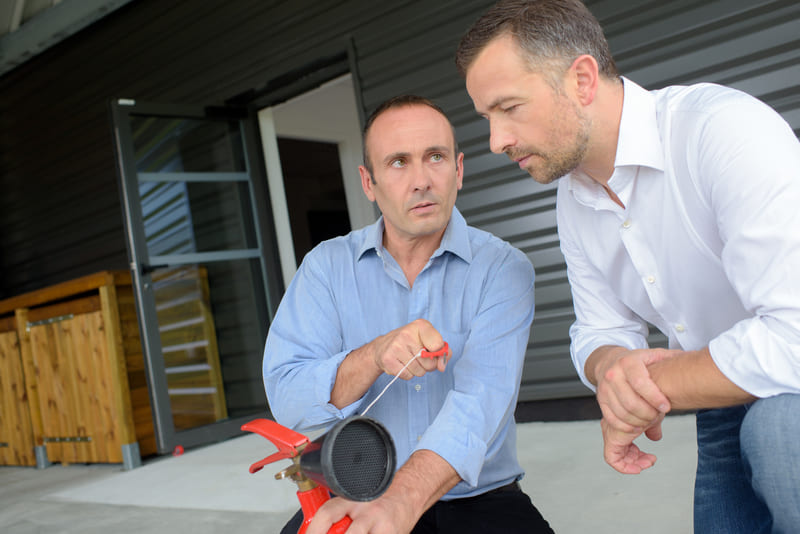
Here in South Africa, fire emergencies are unpredictable, dangerous, chaotic, and often fast-moving. Across workplaces in Mzansi, the first responders to any fire incident are commonly employees who are on site, and not EMS members. As per the National Disaster Management Centre, today, fire-related emergencies continue to pose a serious risk to human life, property, and operations, and this is notable in the industrial, commercial, and high-density environments of our nation.
Because of this, fire fighting courses must go beyond basic awareness. Proper training gives people the tools to understand how fires behave and to assess risks. It teaches them how to make safe decisions under pressure. People should not have to rely on instinct or guesswork. Instead, trained responders follow structured procedures that focus on safety, coordination, and control.
In this EMCARE guide, we’re going to unpack how our fire fighting course takes theory and puts it into practical competence, to prepare our learners to be able to handle real-life emergencies with confidence, safety, and clarity.
Why Do Real Emergencies Require More Than Basic Awareness?
In a real emergency, there’s no time to pause, think, or search for instructions. Smoke spreads fast, visibility drops drastically, and conditions can change in seconds. In these crucial moments, basic awareness is not enough. Simply knowing that fire is dangerous does not mean knowing how to respond safely, when to intervene, or when evacuation is the only safe and responsible option.
That’s why a structured fire fighting course is so important; it trains people to go beyond surface-level knowledge, giving them the tools and knowledge to make applied decisions. All learners at EMCARE are taught how to assess the size and the behaviour of a fire, identify potential hazards in the environment, and understand the limits of safe interventions. Having this information helps prevent common mistakes like attempting to fight a fire that’s too far out of control already or using incorrect equipment that will only exacerbate the situation.
But most importantly, real-life emergencies can place intense psychological pressure on first responders. Panic, poor judgment and hesitation all escalate risk and can endanger human life. Learners are conditioned through practical fire fighting training and thus are able to remain calm, follow procedures, and act decisively, with purpose, even under stress. It is this ability that allows people to respond with confidence safely as opposed to impulsively, separating basic awareness from true emergency readiness.
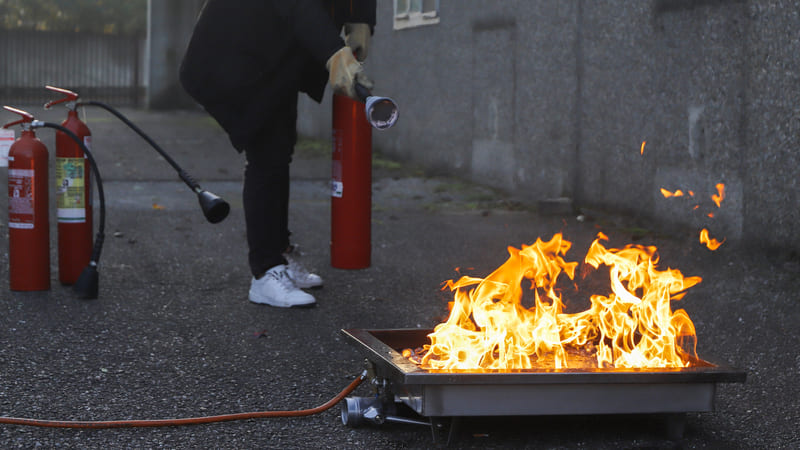
Theory vs Action: Applying A Fire Fighting Course
Of course, we know that understanding theory is important, but in a real emergency, action needs to be taken. Any fire fighting course worth its mettle is designed to bridge the gap by teaching learners how the theoretical translates into the real world of decision-making.
Our training focuses on how to recognise the behaviour of a fire as it happens, understanding how heat, fuel, and oxygen work in different environments, and how to gauge when it’s safe to intervene.
Structured response is another thing that is emphasised by applied training; our learners get to practice following defined procedures rather than having to rely on instinct, which greatly reduces the potential of additional risks during high-pressure scenarios.
All of this includes how to assess escape routes, how to use equipment correctly, and how to effectively and safely work within a coordinated response plan. When learns repeatedly apply these steps in a controlled condition, they develop familiarity as well as confidence that they carry over into real life.
Via this approach, fire training effectively turns knowledge into usable skills; instead of only knowing what should go down during a fire, our trainees have a proper understanding of how they should respond in the moment, which, of course, supports much safer outcomes for themselves and other people around them.
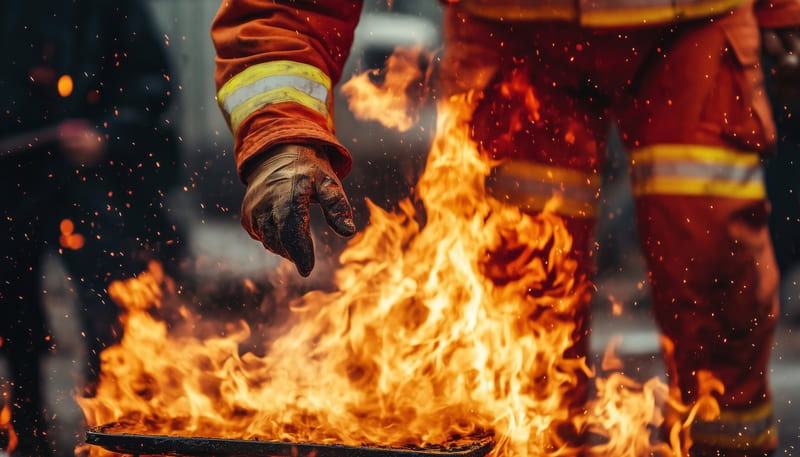
How Scenario-Based Training and Simulated Environments Work: Fire Fighting Course
We all know that no emergency unfolds neatly, or in a predictable fashion, and this is why scenario-based training is so crucial in any effective fire fighting course. Learners don’t have to only rely on demonstrations or theory as they are also placed in controlled simulations that closely mirror real fire conditions. These simulations also introduce several emergency variables: limited visibility, time pressure, equipment handling, and proper, safe, coordinated team response.
Learners get to experience just how fast conditions can change in these simulated environments and learn how vital sequencing and decision-making is under duress. Additionally, it also reinforces the safe use of PPE (personal protective equipment), and teaches responders to operate with defined limits, making sure that safety is always the number one priority.
Learners develop muscle memory and situational confidence by practising in these realistic settings, and when they are faced with a real emergency, the environment will feel familiar as opposed to overwhelming, which results in a calmer and more controlled response. It’s this which transforms training into preparedness, and why scenario-based training plays such an imperative role in prepping cadets for real-world fire emergency situations.
EMCARE’s Fire Fighting Course: Always Be Ready When It Matters the Most
Real-life fire emergency situations require more than just awareness. They also require that responders are prepared, practised, and can act with confidence under the pressures of an emergency. A proper fire fighting course gives people the practical skills, confidence, and knowledge of structured responses that they need to safely and effectively manage fire incidents in the real world.
From having a deep understanding of how a fire behaves to safely carrying out procedures during situations that are highly stressful, having the right training can make a crucial difference in the protection of human lives, property, and operations.
So, if you’re ready to take the first step in your career as a fire fighter, head over to the EMCARE website today, and learn more about our accredited fire fighting course and find the level that suits you and your career goals.