

A fire fighting course shouldn’t be something that businesses invest in for the pure purpose of achieving fire safety compliance. Compliance is important in that it prevents fines and penalties, but it alone doesn’t prevent fires. This article will look at the elements you need in your workplace to attain real fire-readiness.
You’re going to need a training course that instils in your workforce a physical readiness and psychological calm, to help them overcome hesitation and work together as a team. If a fire were to ever occur in or around the workplace, you’ll be beyond grateful that you took the initiative to equip your workforce with a course that cares, giving you the edge you need to effectively fight fires.
Compliance Alone Does Not Stop A Fire
Safety standards are being intensified and enforced more strictly on a global level. This is very true for the sake of fire safety, which has an extensive range of rules and regulations surrounding the practice. Safety inspectors pay particular attention to this point, ensuring that businesses and workplaces are fire safety compliant, or else become liable to receive harsh penalties and fines.
As a result, a fire safe certificate is something South African businesses are all determined to attain and maintain. The problem is, simply having this certificate isn’t going to prevent fires alone. Just aiming to mindlessly fulfil ticked boxes won’t be enough in the face of a real crisis. Instead, you’re going to need a sense of practical readiness that can only come from a detailed and expertly provided fire fighting course, like that of EMCARE’s.
Why Tick-Box Safety Training Does Not Suffice
Why exactly does the single-minded ticking of safety requirements not work in stopping real fires? At the end of the day, it’s mostly a mindset issue. From the company’s perspective, a fire fighting course is just treated as a once-off admin task, a necessity of bureaucracy rather than a lifesaving tool. This usually motivated them to select the most convenient and affordable course that manages to just cover the bare bones of what’s required by regulation.
This lack of enthusiasm and quality affects employees, who are more than likely to simply endure the theory and then forget about it afterwards. From the eyes of the law, this is enough to make a business fire complaint. Yet it doesn’t make the workforce capable of actually dealing with a fire should it arise.
You’re going to need something like the EMCARE fire fighting course, an enthusiastically delivered experience that impresses upon all trainees the real importance of what they’re learning and gives them a hands-on chance to make a real difference.
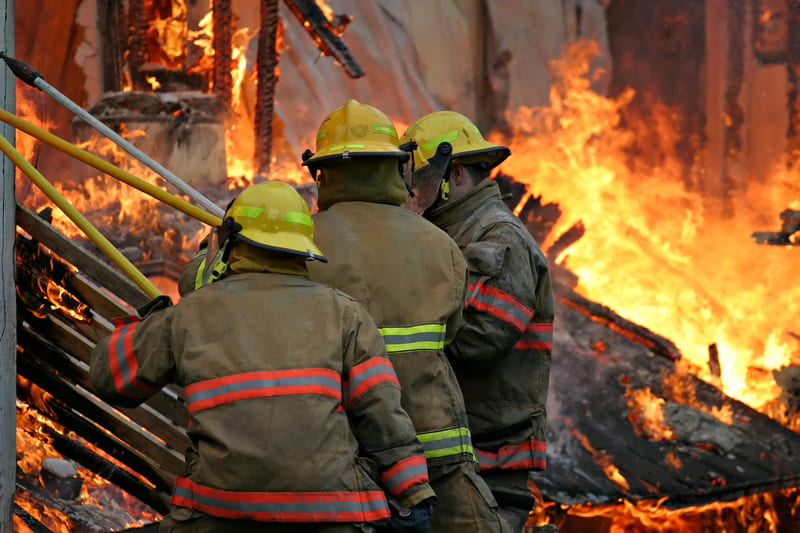
A Practical Fire Fighting Course Makes A Difference
Often, the factor that makes the difference between an average course that certifies a business as compliant and the course that leaves a workforce capable is the level of practical training involved therein. Because in a real-life fire scenario, everyone needs to act quickly to prevent a disaster from occurring.
They need to know how to respond not only from an intellectual standpoint, but through physical action without hesitation. The only way to achieve this level of ingrained physical response is through repeated practical exercise. The EMCARE fire fighting course works to make physical fire response muscle memory, allowing trainees to act without hesitation, but still with thought. This single point alone makes our courses an asset far beyond any compliance-only oriented course.
Fire Awareness Starts Before The Emergency
While the popular imagining of a firefighter’s role certainly looks like a lone hero rushing a burning building with a hose in hand, any experienced firefighter will tell you that the ideal scenario is one where no drama occurs at all. This might look like turning off a stove plate, extinguishing a lit cigarette on the floor or patching up some exposed wiring on a plug. If you’ve done a fire fighting course, you’ll know that each and every one of these little hazards carries within itself the potential to spiral into a total disaster if given the chance, growing from beginning to a little flame to a roaring blaze far faster than you’d believe. As such, it pays off to be aware of these hazards and unsafe habits around the workplace, allowing you to stop fires before they’ve even had the chance to begin. This level of diligence isn’t necessarily expected from you on a compliance standpoint, but it’s one of the most valuable attributes to have.

Teams Need To Work Together Under Pressure
Firefighting is about so much more than the actions of any individual. Merely chasing compliance might go as far as to teach each trainee how to prevent and suppress fire, but it’s unlikely to teach the entire workforce how to muster together and act as a firefighting team. With a top-notch fire fighting course, that all changes.
Trainees will learn how to act as a team with separate roles but a common goal, dividing into those who act, those who evacuate and those who report. Having trained together to operate like this helps to reduce the panic and confusion that inevitably wants to bubble to the surface when we’re faced with a fire. But together you’ll learn to overcome this fear and the fire causing it, working as a team to protect yourselves and your shared community.
Conclusion: A Real Fire Fighting Course Is Not A Tick-Box Exercise
In conclusion, legal fire safety compliance is a good starting point, but it cannot be the end goal. Businesses need to take the risk of fire seriously, acknowledging that it could lead to not only a loss of revenue but also a loss of life. The only way to respond to this threat is through a detailed and practically oriented fire fighting course, such as that provided by EMCARE.
Trained staff will be able to react calmly and effectively, mustering together as a team to combat the shared threat. This leads to a safer workplace and community that goes beyond just having been certified as compliant.