
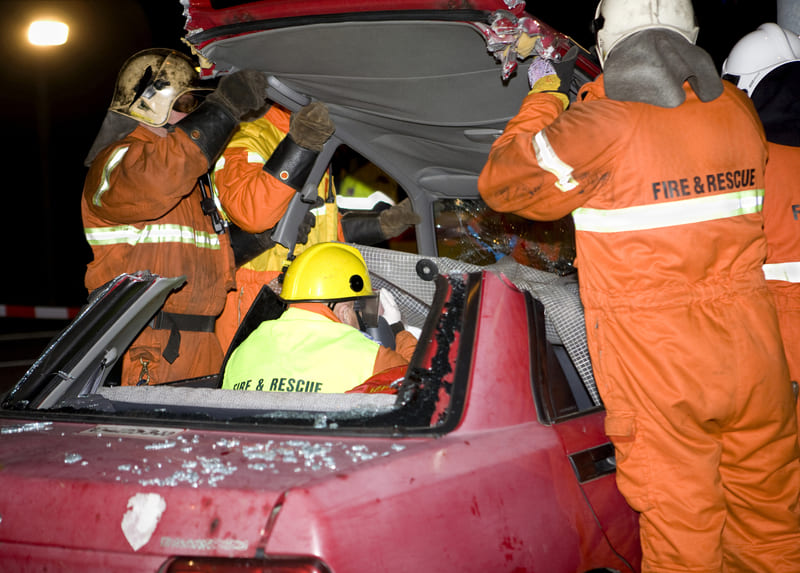
Fire emergency situations hardly ever unfold in the same way twice. The risks you might find on a construction site can be significantly different from those that might be found in a warehouse, manufacturing facility, or public property, but they all share one glaring common reality. when a fire does break out, the first response normally comes from those individuals who are already on site. And thus, fire fighting training plays such a crucial role, especially in high-risk sectors, where those decisions in the early moments can prevent minor incidents from blowing up into major emergencies.
Additionally, in complex, dangerous working environments, simply having generic awareness is never enough. Employees should have fire fighting training under their belts that aligns with the material they work with, the spaces wherein they operate, and the number of people who are potentially at risk. A well-designed fire fighting training course prepares people and teams on how to assess conditions swiftly, how to follow structured response procedures, and how to support the safe evacuation of employees until EMS teams arrive on the scene.
In this article, we’re going to explore just how fire fighting training can address the reality of various industries and why having tailored preparedness is so vital in reducing risk, damage, and downtime.
Construction & Manufacturing & High Heat, Heavy Machinery and Fast Escalation
The construction and manufacturing sectors naturally come with more challenges for safe fire response. Heavy machinery, electrical systems, welding, high-heat work conditions, and constant movement of combustible materials all add to the likelihood of potential ignition.
In these environments, fires can escalate fast, which leaves very little room for error. And this is why targeted fire fighting training is so vital, as it prepares staff on how to recognise the early warning signs and respond safely and effectively before the situation escalates to a point where it becomes uncontrollable.
Situational awareness and safe intervention limits are emphasised in fire fighting training for the construction and manufacturing industries, as learners learn how to safely assess the size of a fire, identify potential hazards like fuel sources or pressurised systems, and how to determine whether suppression is possible or if evacuation is necessary. This kind of knowledge helps prevent people from dangerously attempting to fight fires that have already surpassed safe control thresholds.
As important, fire fighting training also reinforces effective coordination during emergencies. Manufacturing facilities and construction sites are noisy, crowded and complex, which of course can make communication a challenge when an incident occurs. Thus, effective fire fighting training helps team members operate within response plans that are structured, equipment is used correctly, evacuation routes are kept clear, and emergency services are given accurate information when they arrive on the scene.
Warehouses, Logistics, Fuel Storage: The Risk Of Fire Load And Scale
The logistics and warehousing sectors come with a whole different set of fire risks, driven mainly by scale and fire load. Think high volumes of goods being stored, packaging materials that might be flammable, the constant movement of vehicles all foster conditions where fires tend to spread fast and are difficult to contain.
Our trained responders are taught how to identify when suppression is feasible and safe, or when immediate evacuation is the safest. And this judgement is notably vital in facilities where access routes can become compromised fast, as the smoke and heat of fire build.
Coordination is equally important. Logistics hubs and warehouses operate in shifts with big teams, which makes coordinated communication so important during an emergency. Effective fire fighting guidance helps reinforce structure response processes that help maintain order, guide evacuation procedures, and also support a controlled handover to emergency services. Fire fighting training also helps reduce damage, downtime, and risk to human life by improving early response and decision-making in these high-volume environments.
High Occupancy Buildings/Sites And Public Structures
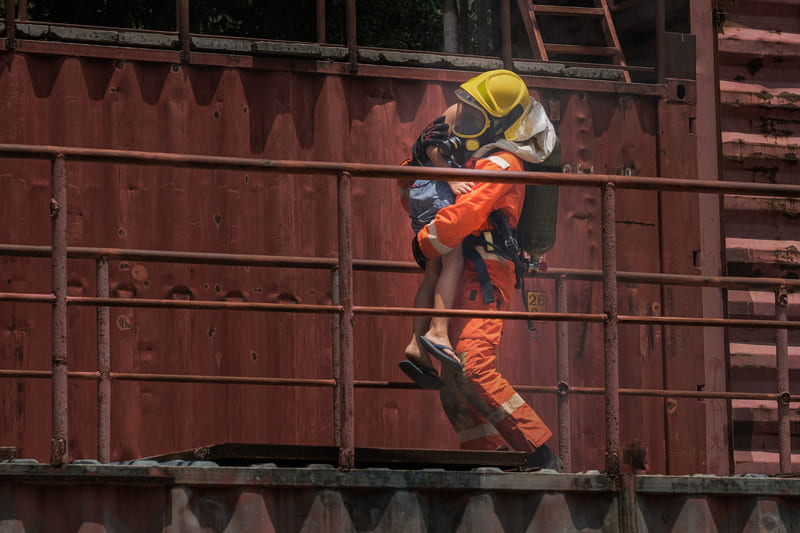
Any high-occupancy site or public building comes with its own fire risks that go beyond just property damage to the immediate safety of high volumes of people. Places like shopping malls or centres, hospitals, schools, office blocks and entertainment venues all demand careful, streamlined coordination during an emergency, as the complexity of safe evacuation increases with the size of the crowd. Of course, in these kinds of environments, effective, accredited fire fighting education is crucial to ensure that emergency response is orderly, calm and prioritises life.
Once again, training in settings of high occupancy puts a strong emphasis on evacuation support and controlled and safe intervention. Cadets at EMCARE are trained to assess developing situations, to guide occupants safely towards emergency exits, and to prevent potential congestion or panic that could lead to serious injury or loss of life.
Having a robust understanding of when to assist with suppression efforts and when to put the entire focus on evaluation is a crucial decision-making skill that is reinforced through proper fire training.
As public spaces usually also involve visitors who might be unfamiliar with the layout of a building, training also supports clear communication strategies during emergencies. A trained responder on site is much better equipped to give concise instructions, manage safe movement through escape routes and coordinate accurately with EMS on arrival.
Training The Right People For The Right Risks
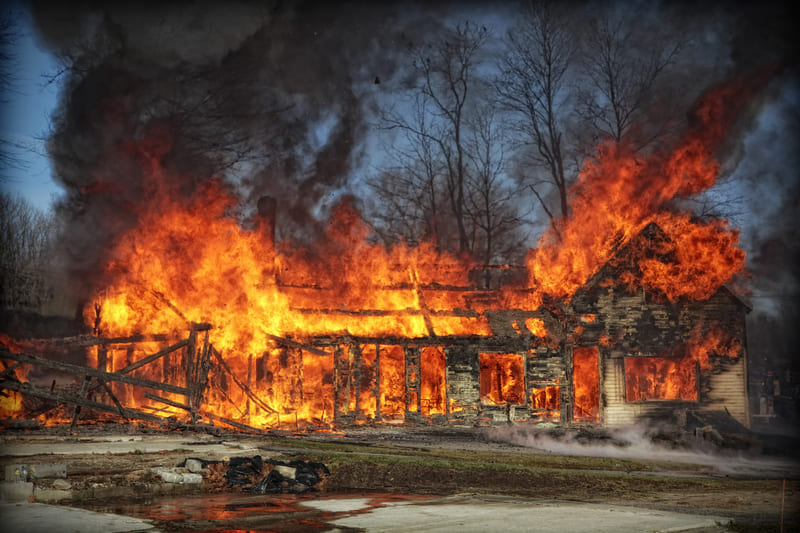
In a nutshell, fire risks are different in different industries, which is why effective training needs to be aligned with real workplace conditions. Here at EMCARE, we offer a structured range of fire training courses, from foundational awareness training to more advanced courses, which allows organisations to match the training levels to their own risk profiles.
Our tiered approach makes sure that your staff are not merely compliant, but ready to respond when an incident happens. When an organisation invests in the appropriate training for its staff, they effectively reduce escalation, protects human lives, and limits disruption to operations.
To learn more about our fire fighting courses and decide on the right option for your workplace, visit the EMCARE site today and take the first step toward a safer and more confident workplace emergency preparedness.