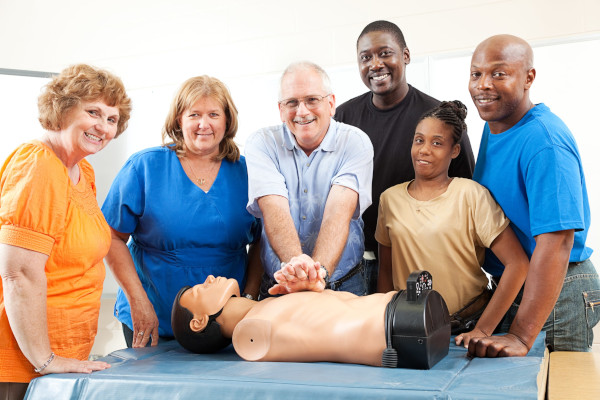
First aid training is often spoken about in the context of certain jobs or occupations, where it is especially necessary. However, it is something that we think everyone should consider doing. Whilst we hope you never need to use it – it could be the difference between life and death in certain situations. Being prepared with the knowledge first aid training provides will always be useful. Let’s have a look at some of the many reasons we believe this to be the case!
7 Situations Where First Aid Training Is Important
We will cover 7 possible circumstances that could come up in everyday life. You never truly know what could happen and first aid training can make all the difference in these sorts of situations.
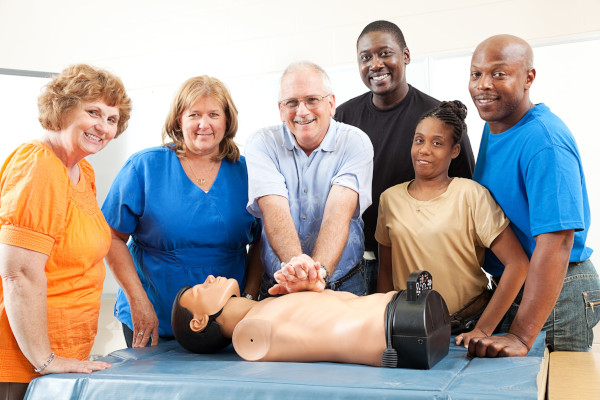
- Heart Attack or Cardiac Arrest: With the help of good first aid training, one can learn how to identify the signs of a heart attack. These often include: shortness of breath, fatigue and chest pain. In the event of cardiac arrest, you would have learned how to properly perform CPR which helps massively in the circulation of blood and oxygen throughout the body – ultimately, keeping someone alive until emergency medical services arrive on the scene.
- Choking: When a foreign object becomes lodged in the airway, it prevents oxygen from reaching the lungs and can end very badly if the object is not removed. First aid training educates individuals on how to recognise signs of choking which often are, gagging, difficulty breathing and coughing. They are also taught the correct way in which to apply the Heimlich manoeuvre and other highly effective techniques of removing airway obstructions.
-
Bleeding: As you can probably imagine, severe bleeding can be life-threatening and
requires immediate and
effective attention. First aid training will show you how to adequately apply pressure to a wound,
elevate
the affected limb and how to dress it properly. -
Fractures: A fracture is a break in the bone, which can occur from a multitude of
different activities.
First aid training will help to teach learners how to identify a possibly broken bone – common signs
would
be swelling, deformity, intense pain when pressure is applied and swelling. Proper first aid
training also
teaches how to immobilise the limb, using a splint or sling, to protect against further injuring the
bone. -
Burns: Burns can be potentially life threatening depending on the location and
severity of the wound
itself. First aid training will teach you how to deal with a variety of different types of burns,
such as
chemical, thermal, and electrical. Additionally, one will understand how to treat and cool burns in
order to
prevent infection and help ease pain.
-
Seizures: A seizure is the result of abnormal electrical activity in the brain, and
can create sudden and
intense involuntary movements in the individual affected. First aid training teaches learners how to
support
and protect someone experiencing a seizure, by placing them on their side and clearing the immediate
vicinity of sharp or potentially dangerous objects. Seizures can be scary to people who are not
trained or
have not witnessed them before, adequate education encourages a calm and collected reaction – rather
than a
panicked one which can often make the situation worse. -
Stroke: A stroke occurs when there is an interruption in the flow of blood to the
brain, which causes
brain cells to die. Proper training should inform learners on the symptoms of a stroke which often
are:
numbness on one side of the body, difficulty speaking and understanding speech, and sudden severe
headaches.
The earlier it has been recognised that a stroke has occurred, the better it is for the individual
in
question.
These Unfortunate Events Can Happen To Anyone
First aid training is so important because these sorts of situations are not exclusive to hospitals or dangerous occupations – they can occur anywhere and to anyone. It can take time for professional emergency services to arrive and every second is vital to the individual in peril. It is in these situations that first aid training truly can be a life-saver. There is a vast number of people who can say that first responders, who have received training, are the reason they managed to survive and recover.
This is the reason why we say first aid training is useful for everyone, whether someone is a family member, co-worker or a complete stranger – being able to assist and possibly save someone’s life is important. It is always a good idea to hope for the best and prepare for the worst, especially in regard to possible medical emergencies.
First Aid Courses Can Provide Peace Of Mind
Receiving good first aid education can greatly reduce general anxiety and stress around medical emergencies – by providing the necessary skills to react effectively in these situations. Understanding how to perform certain life-saving techniques like CPR and the Heimlich manoeuvre, knowing how to manage bleeding and set limbs that have been broken, learners feel more prepared and confident in their ability to provide care.
The training itself familiarises students with the possibility of medical emergencies and should help to remove some of the fear surrounding such incidents. Many people are constantly worried that someone around them may get hurt and adequate preparation helps to remove a lot of this anxiety.
More About EMCARE
We have become a renowned institution over our 20 years of operation, specialising in health and safety training. Besides our excellent first aid training, we offer emergency evacuation training, fire fighting, health and safety courses, and many more. We constantly strive for improvement and aim to cement ourselves as the top training provider in our field.
We have facilities in almost all major South African cities, allowing us to spread our knowledge and expertise as widely as possible. We prioritise interactivity and customer satisfaction, above all, in our training courses. We leave no stone unturned and cover all bases because we understand how important this type of training is. Consider joining one of our excellent training programs and enhance your skills and knowledge!